When the Arbanasi refugees, fleeing from the Turks, first settled in Zadar – current estimate tracks their migration sometime between 10th and 31st May 1726 – among the few things they carried were their memories and legends. They brought their folk songs, melodies and language. Perhaps a small picture of a saint or two, and a cross. Being an illiterate people at a time when most of the world, except for a select few, was largely illiterate, their treasures remained for the most part not preserved. Within the next two or three generations, or as soon as the last member who held the exodus in living memory passed away, the old legends evaporated, vanished. Their grandchildren’s children discarded the elders’ memories of the old country, convinced these memories were the sole reason for them remaining ever foreign and outsiders in their own place of birth and their own hometown. And thus remained in memory throughout the century that followed only that which was perhaps written down by a church chronicler, who had preached and lived among this very folk.
The songs, naturally, proved to be more permanent than the legends. People remember rhymes and lyrics well. That was the purpose of rhymes and lyrics in times of illiteracy when a community’s experience was being formulated in a way that is easily transferable from one generation to another. Melodies, on the other hand, get lost or change over time. By the logic and rule of the metrical foot, old tunes are replaced with new ones. This happens not because people, in general, are not that musical, as some enthusiastic music enlighteners and pedagogues would have you believe, but rather because the melody is something that a folk experience as something of their own, a public good belonging to everyone. And they enjoy recreating an old tune as a new and modern melody, more attuned to their contemporary experience.
And yet the language itself endures. What a miracle, a true and wondrous miracle. The Zadar Arbanasi are a small community from the everlasting edge between the Romanic and Slavic world, that had for centuries and to this very day marked a divide between the city and its hinterland. The two languages, Italian and Croatian, have always represented not only two cultures, one literate and one (largely) illiterate, but also two contested social classes, two mutually exclusive cultures, two ways of life, each living on its own side of the divide. Occupying a space in-between, Arbanasi people were one of those small communities that are often present in such divided places who would strategically and wisely over time side with ones or the others, looking for a way to survive. Their language was the only identity they had. A language no one understood within hundreds of kilometers radius. A language of their own, an intimate language.
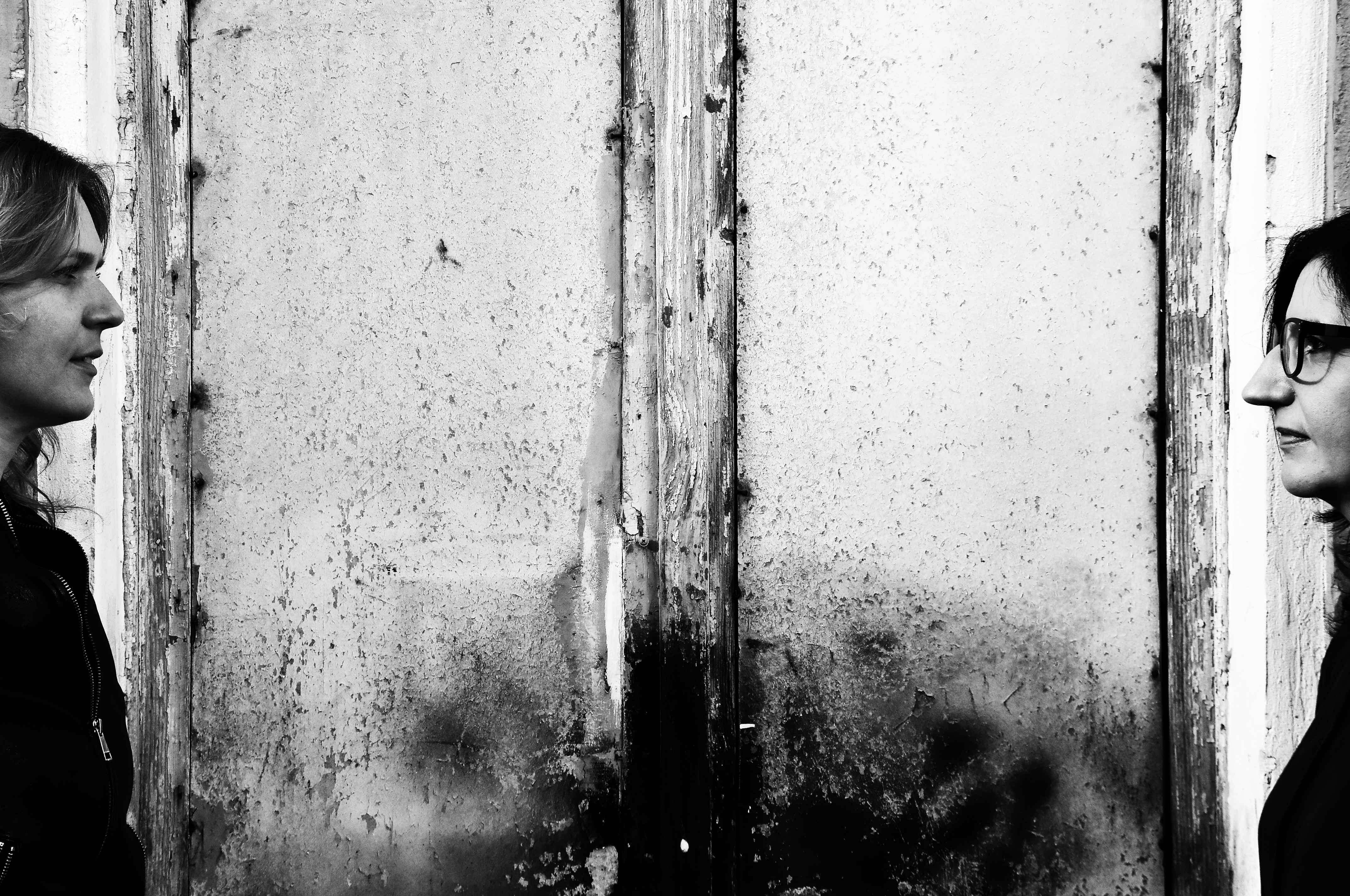
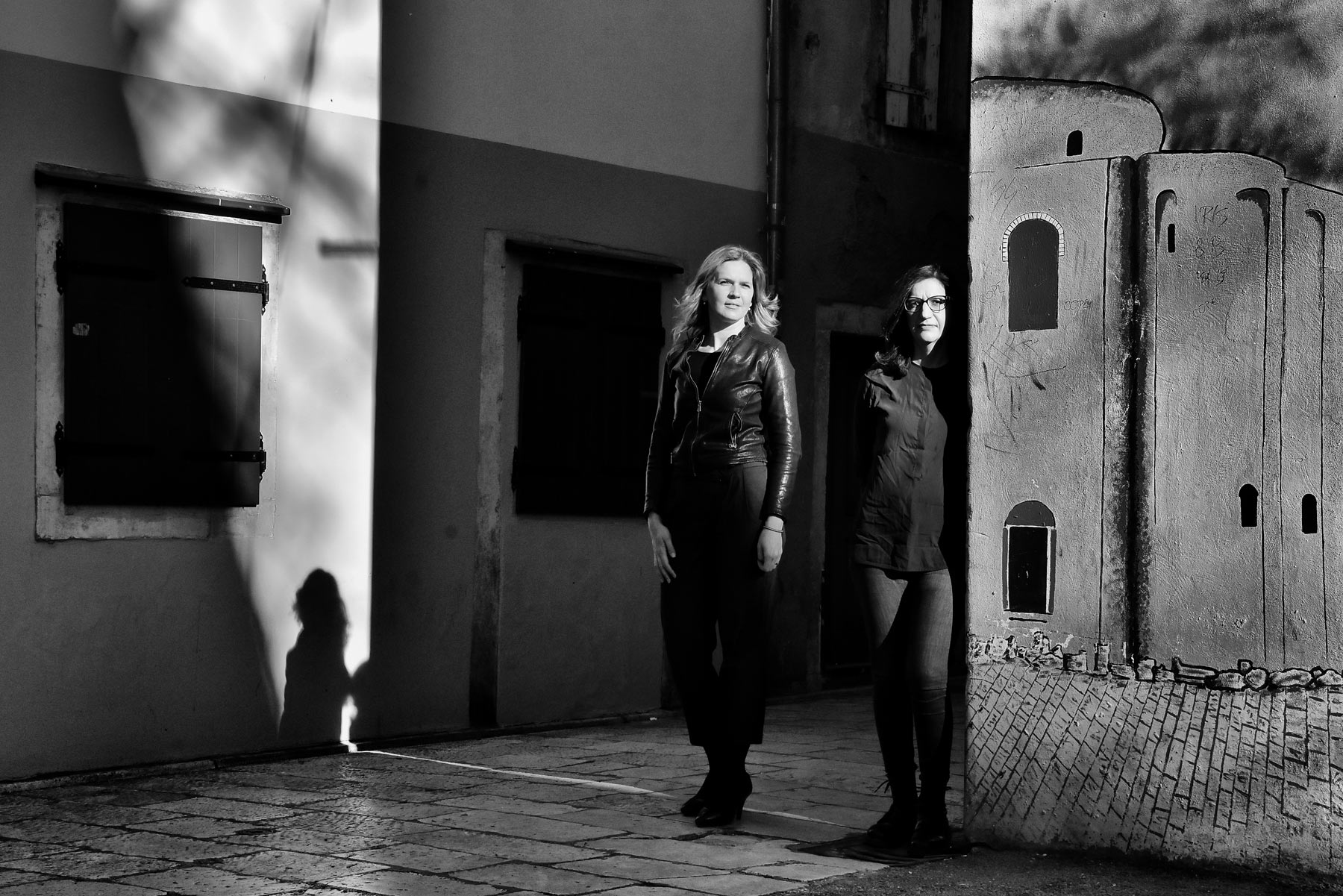
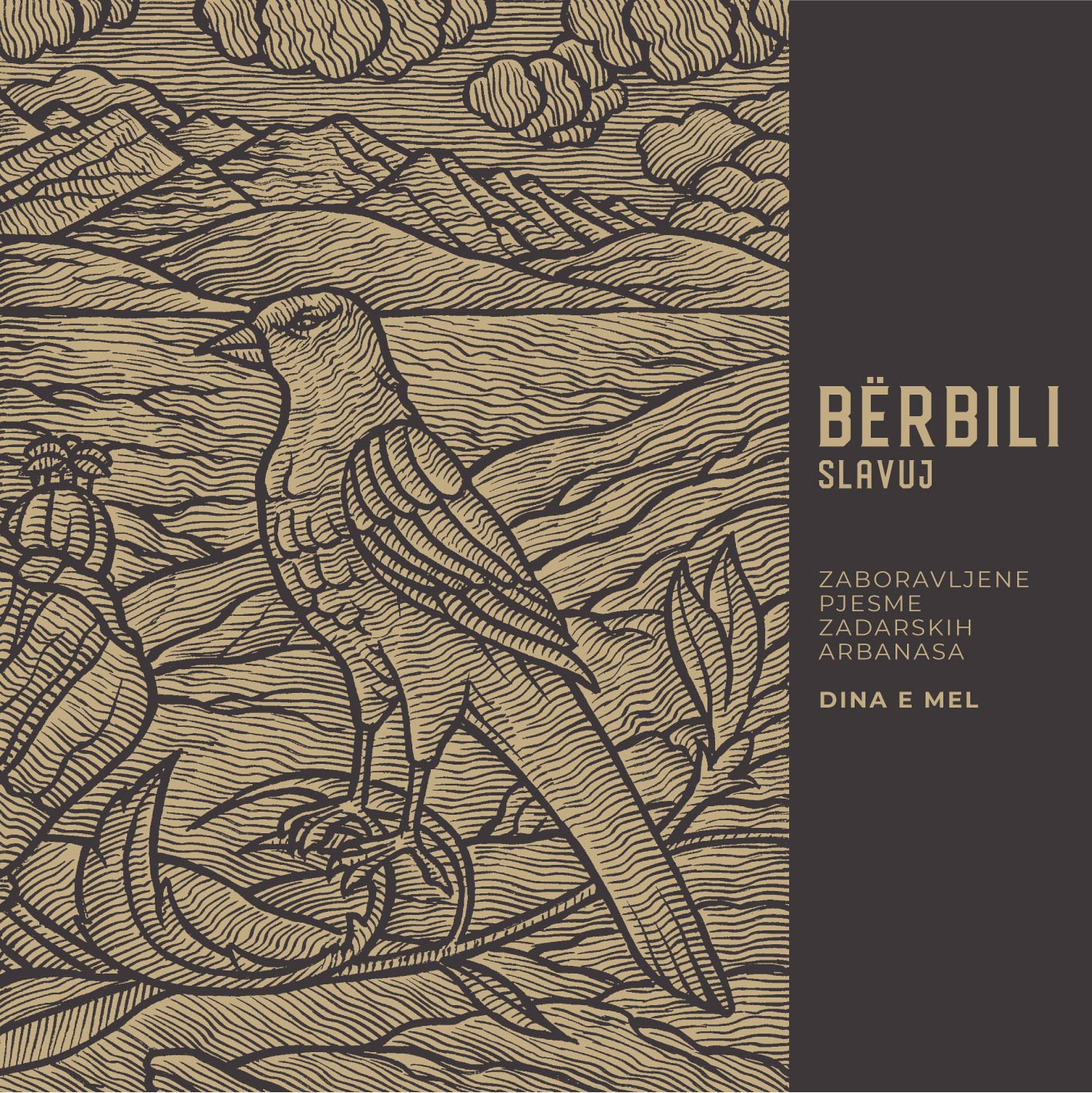
Dina Bušić and Melita Ivković are here to perform and sing the songs of the Arbanasi people three hundred years after their arrival to the city. Accompanied on their journey by Miroslav Tadić, Yvette Holzwarth and Edin Karamazov, they present their listeners with a little puzzling musical box, whose secrets are unlocked with two different keys. It hides the linguistic and cultural experience of the Zadar Arbanasi community, but also the experiences of someone’s grandparents still guarding the memory of the times past – probably from the pre- and post- World War II period, a time when the Arbanasi songs were still being created and modified. That period was followed by a ‘silent era’ when music unified by radio, television, and gramophone meant a loss of all local and minority memories and experiences.
What we get to hear are the far-reaching echoes of the Balkans, the spirit and melody of the Italian inter-war canzone, rhythms of children’s nursery rhymes, the mood of festive tunes sung at the celebratory day of the community’s patron saint… The record is only partially an actual heritage, but even more so an expressed need to nurture the gift and talent of said heritage, to maintain and build upon the immense experiences of the small Arbanasi world. It truly is exciting to hear how Dina, Melita, Edin, Yvette, and Miroslav complement and annotate the Arbanasi musical experience, and how the existing vacant spaces and grey areas of forgetting are filled up with their own interpretation, aesthetic faith, and fascination. Their music is one of a lived experience, not some unclear or assumed musical history, and is inscribed with words and mostly simple prosodic forms of a secret language. Besides being a true memento to the same small and gentle heritage that was brought to Zadar in May 1726, it also presents all of us today with a twofold gift. The Zadar Arbanasi are presented with their own little songbook, a reminder of how important it is to learn and know one’s own old language, and the rest of us are introduced to the Zadar Arbanasi and their culture as a treasure of our own treasure, the soul of our own soul.
Finally, on an entirely personal note: this listener was so deeply moved by these songs upon every listening, in a way I imagine a librarian of the Alexandrian library may have felt had he managed to save but one written artifact from the flames. I felt this way the very first time I listened to the record, as well as any of the subsequent twenty times. And even at times when I had almost forgotten what I was listening to, I was still moved. In my world, this can only mean that these are good songs, that they are the songs of a living people, a powerful and sincere interpretation stretching over centuries, all the while remaining entirely intimate.
Miljenko Jergović
On my mother's side, I am an Arbanasi. Both of my grandparents are Arbanasi. Stipčević, Matešić, Perović – these are my ancestors' last names. One of my great-grandfathers was called Kire. He couldn't carry a tune, but he had a strong voice. At Sunday mass he would sing his own alternate version of Kyrie Eleison. And so he became known as Kire. Another great-grandfather was called Fjaka [in Dalmatian jargon, fjaka means: doing nothing, laziness]. No need to explain why.
My fondest childhood memories are those of the celebratory processions marking the day of Our Lady of Loreto in Arbanasi, which I always gladly participated in. Auntie Marija, a kindhearted lady in charge of organizing all church events, used to prepare special dresses for us to wear. Of course, I loved participating mostly because of the white dress, the shiny headpiece, the basket full of rose petals I would scatter on the road as I walked behind Our Lady. I felt truly special every time I participated in the procession, with everyone around me admiring our youth and the ritual, and older people asking me whom I belonged to. I would tell them I am Fjaka and Kire's, even though I had never met either of the great-grandfathers.
Arbanasi dialect was spoken at my grandparent's house (whom we called baba and dida) only when they were fighting, passing on secrets or stories that us children were not allowed to hear. We understood only a few words, naturally, mostly curse words, as one does. Besides baba and dida, only the eldest of their three daughters, my mother, was fluent in the Arbanasi dialect. Since the family lived on the 'other' side of the rail track, meaning outside the inner circle of Arbanasi, my mother and her sisters mostly played with the children from the city, who used to make fun of them when they spoke their Arbanasi dialect. And so little by little their language became neglected in our home. It remained reserved only for baba, dida and my mother in times of crisis.
Many years later, in 1999, after the war, after having moved to a different part of the town and after a whole series of less than pleasant circumstances that had distanced me from Arbanasi, as a musicology student, I was assigned a seminar task to do research and record performers from my own heritage. Since baba Ermana had an ear for music, I thought I would ask her to sing an Arbanasi song or two (if one even existed, since at the time I had no knowledge of the topic). I was careful to avoid my dida with regards to singing because he took after his father Kire, and was sadly useless for the task. My baba on the other hand truly amazed me. She sang for me in her fine lyrical soprano a song called Zogu i verës. This is the oldest known song of the Zadar Arbanasi. The simple melody is accompanied by a text about a spring bird singing about the Arbanasi. She also taught me to sing Jam Arbëneš, a song that was created as a contrafactum. The text was written in Arbanasi dialect to the tune of an Italian song. During the Italian reign between 1920 and 1945, when people from Zadar were singing Son' Zaratin (I am from Zadar), the people of Arbanasi were singing Jam Arbëneš (I am from Arbanasi).
These few songs were the only things my baba Ermana learned in her childhood, being left an orphan at the age of five, so she turned me to her aunt Klara Mazija. She and her daughters (Ana Modrinić, Fernanda and Eda Mazija) sang the song Me ofičala to me. I remember how we all laughed as they were translating the lyrics for me. For this album, I decided to merge the two songs, as short and fragmented as they were (or had always been), since their topics come together so nicely. The song Me ofičala is a lighthearted miniature of Zadar after World War II, when girls from Arbanasi were wearing (at the time quite expensive) silk stockings and did not want to go out with the young Arbanasi men from, but rather preferred military officers, who they wanted to marry. Jam Arbëneš, on the other hand, brings a song of a proud youth of Arbanasi, a full-blooded man, a church-going believer who celebrates Our Lady, unlike the officers for which the young ladies pine. The original text speaks of a man from Arbanasi who comes home drunk every night. I was introduced to the nobler version of the song, the one we ended up recording, by my professor of solo singing Mario Petani during my time leading the women's klapa choir [klapa: traditional choir singing style from Dalmatia] Arbanaške. As he explained, imagine what people would say if women were to sing about some Arbanasi drunkards!
My dida Ante, who was known by his nickname Čarli because he was as funny as Charlie Chaplin, told me to visit his best man and my baba's cousin Petar Uči Perović. Lala (a term we use to refer to uncles) Uči was a legend of the Arbanasi church choir Vicko Zmajević, whose baritone performances and vigor as founder and organizer marked the choir's golden age. He was the one who first sang Bërbili to me. A single verse, whose four lines are made up of two repeated melodies, seemed useless at first. But once we started working on the project, Miroslav Tadić told me the melody reminded him irresistibly of a sevdalinka song [sevdalinka is a traditional genre of folk music from Bosnia and Herzegovina] entitled Anadolka. Brief research on the topic uncovered a documentary about that very song entitled Čija je ovo pjesma by a Bulgarian filmmaker Adela Peva. That exact song, sung all over the Middle East, Balkans, Turkey, Macedonia, Bulgaria, Greece, Serbia, Bosnia and Hercegovina, and Albania, was used to stress the meaninglessness of hatred among nations. This is why I decided to perform the song in three parts: one from Arbanasi (Bërbili), one from Bosnia (Anadolka) and one from Turkey (Üsküdar'a gider iken). The Turkish version is probably the oldest one known, and according to some sources, it was sung even before the Turks by Sephardic Jews.
Lala Uči then turned me to Ana Perović, another legendary singer of the Arbanasi church choir, a soprano performing with her lyrical voice even the highest tones during masses and performances, and even during a recording of the Choir's LP produced by Jugoton in 1979. Both her and Nino Relja, at whose house we hung out during the recording of the material, sang a beautiful song authored by the Arbanasi tenor, opera singer and musical editor on Radio Zagreb – Daro Kalmeta – called Netët from 1956. They even gave me some noted music that someone had scribbled down (the melody that was sung was not the same as the one written down). The song is actually a nocturne, a touching love song painted in the colors of the night, irresistibly reminiscent of the Portuguese fado, thanks to the incredible sorrow that lala Daro infused it with so skilfully in melody and text. Ana Perović also sang me a love song about Vana, Milo and Jak called Ni merje kam Vana. The song speaks of an arranged marriage, and its melancholy evokes universal feelings of sorrow, desolation and a lover's pain. Lastly, Nino Relja and Ana Perović taught me a song called Arbëneši vendi tem. As soon as they sang it, I immediately recognized the melody as one taken from the Neapolitan Torna a Surriento. The text describes Arbanasi people from the micro-localities of Karma and Bregdeti Bay and was written by Bruno Morović Gišpa in 1956/1957, leaving his home for good to go to Italy. Both Neapolitan songs and Italian arias, especially those by Giuseppe Verdi, were often sung at our home. The only problem was that the only one who remembered the lyrics was my tone-deaf dida Čarli. Yet he was such a passionate and loud performer, like his father, as he sang at the end of family meals after a few glasses of wine, and it was so much fun listening to his stories in his poor Croatian about the times he attended opera performances at Teatro Verdi.
In 2017, many years after first recording this material, I turned to Bernard Kotlar, a passionate collector of Arbanasi heritage whom I had read about in the papers. Son of the famed singer Lidija Kotlar, whose performances of these songs he keeps recorded, he sent me a nursery rhyme entitled So edua nanen and performed by Palma Pedišić (b. Nikpalj), known as auntie Palmica. On our list of mocking folksongs, love songs, and pastorals, this was just what we were missing!
Two songs from this album do not originate from the Zadar Arbanasi, but rather the Arbanasi from Italy. Namely, a hundred years before Arbanasi had moved to Zadar, many Christians from Albania ventured towards Italy. They too are called Arbanasi and nurture a rich cultural tradition and language. I have chosen two of the most beautiful ones! Moj e bukura More speaks of the sorrow felt by the Italian Arbanasi for their homeland (More / Morea – Peloponnese, the peninsula many of them originate from) and Ishjë një ditë të mojit majit, a love song with a pastoral atmosphere that is even today sung fondly by the Italian Arbanasi.
This project would never have seen the light of day had it not been for a whole series of unforeseen coincidences and unplanned circumstances. Maximilijana Barančić (b. Karuc), a passionate promoter of the Arbanasi culture, invited Melita and me to prepare a few Arbanasi songs for the promotion of her book at the Zadar City Hall in 2017. We threw together several songs in a few days' time. The audience's reactions were magnificent. Many of the older Arbanasi people congratulated us with tears in their eyes, my mom was bursting with pride, and for my own part, I was most struck by the reactions of my partner in music, Melita. She was the one who made me aware of the fact that I had been holding in my hands something truly valuable, something that we could develop together and enrich with our own spirit and musical invention.
Dina Bušić
I have this habit of dreaming of cities. In my dreams, they are naturally always somewhat different as I shape them to my own tune, as one does. I have traveled to many cities. A professional musician's destiny does not allow one to stay in a single place for a long time, but rather to perform and open one's soul briefly, and in return soak up the part of the soul that is the city, only later to be analyzed and cherished in one's fantasies and dreams. Of all the cities, I have most often dreamt of Zadar, a city I have left at 15 years of age, until an inner voice spoke to me saying: Do not just dream of Zadar, go back and live there.
Zadar is a city built to measure, and Arbanasi is measured along a walking promenade from Kolovare to Punta Bajlo. Our story fit into the length of one evening walk along that very line when Dina and I were telling Miroslav Tadić of our plan to record her grandmother's songs, and he ended up asking us, somewhere around the house of old Fjaka, Dina's great-grandfather: "Could I play with you too?"
How does one make a cover of those melodies, so much a part of my town, but also of its almost unknown history? When I think of all the influences that went into this mental process, they seem to merge into a magical soundtrack of my entire life – from Villa-Lobos and classical guitar literature, through Stravinsky and Pulcinella, Britten's English folksong covers, to Portuguese fado, early and traditional music projects of Edin Karamazov, Tadić's sincere approach to folklore, and fragments of my own guitar compositions that I had been writing in secret since childhood – a rather unusual combination, just like this city, a special kaleidoscope of chards of history whose pieces can literally be found among pebbles on the beach. This is my dedication to Zadar, the city I live in, the city I dream of.
Melita Ivković